

History
“Ancient Greece” is a very evocative concept, and when I started this project, I always knew that there would have to be a “History” section. However, when it really comes down to it, unless you visit the Parthenon in Athens or go to some of the other mainland sites, it is sometimes hard to find any real evidence for the ancient home of democracy. In the end, trawling through the photographs from my Greek island holidays, Crete turned out to be the island that gave the best insight into the history of the region.

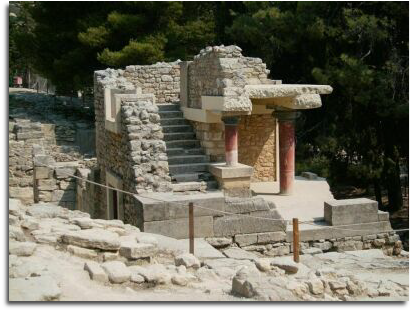
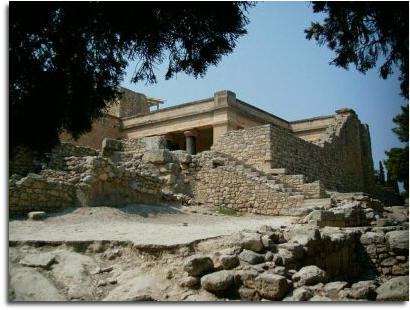
And so I start with Knossos. In 1700 BC (before the “ancient Greeks”), this palace was the largest structure in Europe. The Minoan civilization thrived as a trading nation, with Crete at its centre, and the palace of Knossos was the jewel in their crown.
It took a major natural disaster to bring Minoan culture to its knees and leave a power vacuum for the Greek mainland to fill. This is controversial stuff, but I personally believe in the theory that says that when the volcano on Thera (Santorini) erupted, it was bigger than Krakatoa and caused tidal waves to destroy fleets and harbours in the north of Crete. This was then followed by years of failed harvests because of dust and sulphur dioxide in the upper atmosphere.
Their state, which was based upon priest kings who exacted taxes in return for keeping the gods appeased, just couldn’t withstand such a disaster.
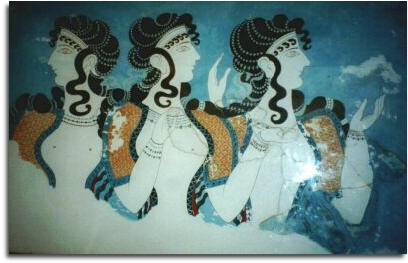
This fresco from Knossos is a favourite of mine. It is just so hard to believe how old it is. Have you ever seen the mythological drawings by Jean Cocteau, which he produced in the 1920s and 30s? I am sure he must have seen this delighful fresco as he was developing his style.
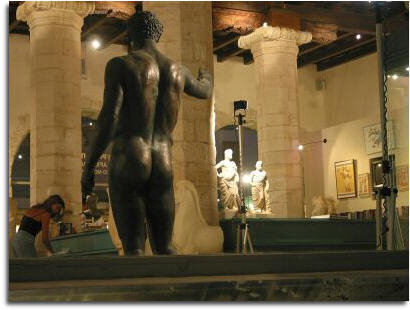
On a more “traditional“ note, this available-light photograph was taken one evening through the window of the 16th Century Loggia in Rethymnon, which has been restored and converted into a shop selling archaeological reproductions.
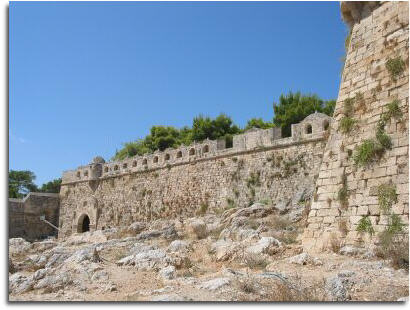
The Venetians ruled Crete from 1210 to 1645 and this fortress has dominated the town of Rethymnon since the 16th century.
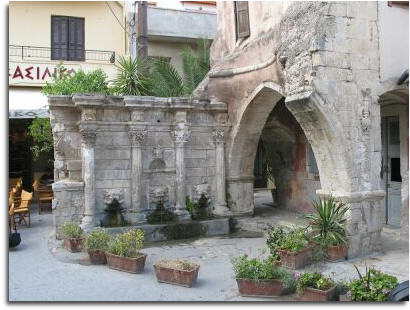
The celebrated Raimondi fountain also dates from this time.
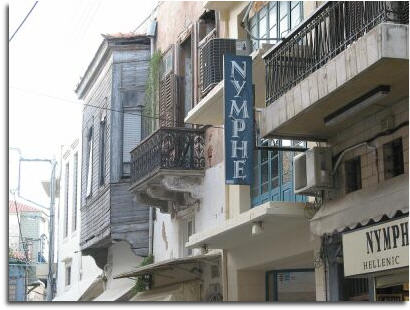
When the Venetians were finally thrown out of Crete in 1645, it was the Turks who took over, and as a result, Rethymnon started to sprout mosques, minarets and the covered wooden balconies typical of Turkish architecture of the period. This picture shows a typical Venetian balcony, and a typical Turkish balcony right next to each other.
When the Turks left, it was Russia who took over the Island. Quite a
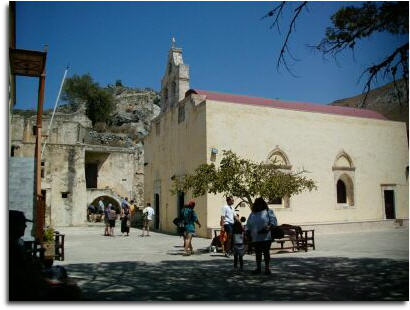
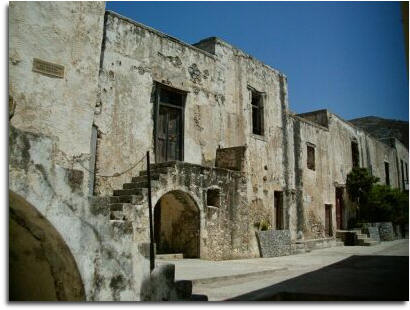
The next two photographs are of the monastery at Preveli. The monks here played a pivotal role during the Battle of Crete, hiding allied servicemen and helping them to escape down the gorges to the south coast where submarines were waiting for them. The monks paid dearly for this involvement.
These cells are living quarters for the monks and rightly belong in a “history“ section. They look wonderfully weathered.
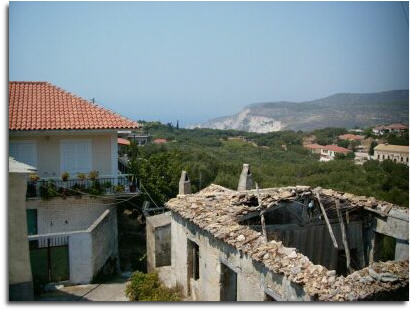
So, Crete is a great place for history. But what about my other islands - Corfu, Kefalonia and Zakynthos? I am afraid that they are Ionian, and this picture pretty much sums up what has happened there. A catastrophic earthquake in 1953 levelled the majority of the buidings on the islands. You now basically have pre-1953 ruins and post 1953 pastel-coloured modernity. It is charming and it can be beautiful, but it is rarely historic.
That is not to say that you can’t find antiquity on the Ionian islands, but it is fairly spread out and the average holiday-maker will not come across much
